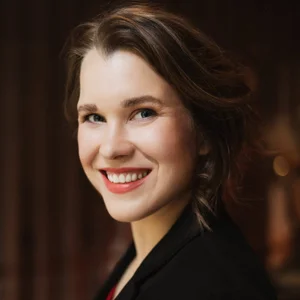
Conducting As Leadership With Cornelius Meister (LCPS01E16)
Preview
Cornelius: So I must see, I must feel, I must hear what everybody in hopefully every moment needs. And why something might not happen, not work in the first or in the second rehearsal. What's the reason for that? What could I do that it works?
This conversation was recorded in October 2023.
Intro
Lena: In our work as engineering leaders, there aren't a lot of places where the way that we lead becomes super widely visible to a lot of people, like maybe you give a presentation at some point to your entire company or at a conference. But outside of that, a lot of leadership just happens in smaller group or isn't really visible at all to maybe one person or two and no one else.
A while ago, though, I was able to watch someone lead who made me really curious about how he does it. And I saw that person lead in a very public way. I watched a conductor leading an orchestra in a concert. And today I'm sharing with you my conversation with him. This is Leadership Confidential with Lena Reinhardt.
Real talk on more than two hard things in technology, finding community, and becoming the engineering leader you can be. Today, conducting as leadership, with Cornelius Meister, a German conductor, pianist, and now Generalmusikdirektor or General Musical Director at Stuttgart State Opera.
I love classical music and going to classical concerts. Also because there's assigned seating and always a really relaxed atmosphere that I enjoy. I've been playing the violin since I was six years old, and as part of my education, I got to play in many student orchestras, which I always really loved.
It's beautiful to play a piece of music and actually feel like you and this group of 30, 40, or 50 people are all kind of becoming one, and these notes on the paper are coming to life. Now, it was February 2022, and I was at a concert at Berlin Philharmonic with an old friend. Playing was Deutsche Symphonie Orchester, or German Symphonic Orchestra, and they had a program of Haydn, Mozart, Bruch, and Beethoven on, and we'll actually have links to the pieces they played in the show notes in case you want to give it a listen.
I'd just chosen the concert for the pieces, but for the first time in my life, I also understood how much of a difference it can actually make who conducts and the way that they do it. I've been to this venue with Berlin Philharmonic a few times before, but this time my friend and I had seats right above the orchestra.
And my friend, who was also in management role at the time, and I, we both marveled at the way that we saw the conductor leading the orchestra and flocking at their heads. The conductor seemed to barely intervene with what the orchestra was doing, only giving directional input here or there. Not doing any of what you might imagine a conductor does, this sort of very intensely signaling every single beat.
But he seemed much more hands off, but still very closely communicating with the musicians, sort of just occasionally guiding where needed and otherwise letting them do their thing. The conductor was Cornelius Meister. He was guest conducting with this orchestra that night. And in the break already, I said to my friend, Hey, I really need to speak to this conductor at some point about his style of conducting and what he thinks about leadership, because the way that he does, it seems so different from what I've seen other people do.
And that's the conversation that you'll hear today. Cornelius and I talk about leading large and skilled teams of highly specialized people, how to balance immediate delivery needs with long term development, how to create space for both individual excellence, but also team cohesion and maintain authority while also encouraging autonomy and creativity and how to adapt your leadership style based on context and team needs.
So, a lot of things that I know are highly relevant to engineering leaders as well. My guest is, as I mentioned, Cornelius Meister, he's a remarkable leader in the classical music world. Since 2018, he's been serving as general music director of the Stuttgart State Opera and Orchestra, where he oversees both artistic direction and organizational leadership.
His leadership excellence has been recognized with multiple prestigious awards, including conductor of the year and under his guidance. The Stuttgart State Orchestra received the Innovation Award from the German Orchestra Foundation in 2020, highlighting his ability to drive creative change in the traditional industry.
At just 43 years old, Meister has an impressive track record of leading major cultural institutions. He became general music director at age 25 already, and went then on to lead the Biennial Radio Symphony Orchestra for eight years and served as principal guest conductor of an orchestra in Tokyo.
What makes the story especially interesting and why I'm so keen to speak with him is his approach to balancing innovation with tradition while maintaining the core repertoire that audiences expect. He consistently introduces new works and pushes boundaries in his field. He's known for strategic programming that combines established works with rarely performed pieces and world premieres and demonstrates how leaders can drive innovation while respecting foundational principles.
Here's real talk on conducting his leadership with Cornelius Meister.
Our Conversation
Lena: I'm exceptionally delighted to have this conversation. It's been one and a half years in the making. andfor context, the reason I reached out to you initially was because I saw you in concert with Deutsche Symphonie Orchester in Berlin in February 2022.
Oh yeah,
Cornelius: in the Philharmonie building.
Lena: exactly. And I sat sort of looking down on the orchestra with a good friend of mine. And, him and I both work in management roles and have for a very long time. and we were both very, just curious to see your style of conducting. and, I still recall during the break, I told my friend, Nick, that, Hey, I need to talk to Cornelius at some point about how he became the conductor that he's today.
and yeah, here we are. So thank you so much for joining.
Cornelius: Thank you for the invitation. It's great to have some minutes together about it. I think really important topic.
Lena: Exactly. So, where do you want to start?
Well, whatever you want.
All right. All right. Well, I'm happy to take the lead there. So, there is, there's, I'm going to start with a quote that I saw on the BBC.
the BBC describes conducting as re imagining an old piece anew, and then bringing this idea to life with an orchestra. how do you feel about that?
Cornelius: What are we doing as conductors? This is really a very good question. And, it's always, also a good question if a piece, some symphony, whatever, is only a piece if it is performed, Or if it exists just on my paper, so as a score, if we follow Richard Wagner, he would have said, yes, a piece is just then a real piece when it is performed.
but there are other composers, who might be. interested in a structure, in something which is maybe even more complete than a performance or ever could be.
Lena: In what way?
Cornelius: We try to do our best, always, every night again. But of course, sometimes we reach what we want, sometimes not, as always in life. And In trying. to reach something, and also sometimes in, in feeling whatever could happen in a performance.
Lena: So it's basically, if I understood you correctly, like a part of it for you is basically just the pursuit of greatness of a good performance.
Cornelius: Yes. We always have something in our minds, and it could be different every night. And also it could be different in the beginning of a rehearsing process and at the end of the rehearsing process.
And then there is always a really special moment when everybody meet each other for the first time, we musicians, everybody of us has studied his own music alone at home, many hours, sometimes years. And then we come together for the first time and everybody has, might have a slightly different approach to that piece.
And then we feel like, together. Ah, interesting. Ah, this is a new idea. And most of those ideas can't be described with words. there's something more always, with music. and so I could, uh, change my approach, to the piece completely, just because of, the interaction with other musicians.
Lena: And that's a, that's an interesting point that I really wanted to,talk about because of course, like the commonality between us is like, aside from our appreciation as music, like you as a professional, me as a very much amateur, but then of course, I'm not going to play the violin today just to spare them to everyone here, but,because you work with highly skilled professionals.
in a big part of, as it is, at least a big part of your work. And you just talked about, you know, basically starting work with them. And it might their input, their ideas, their thoughts might change the way that you think about ultimately the work that you're going to deliver. Like, how do you actually, you know, facilitate that process?
Say you have a gig with a new orchestra who you haven't played with yet. I think actually the DSO performance that I saw might've been one of those. And you probably just have a couple of days of rehearsal with them. You have, you've looked at the sheet music, they've looked at the music, you get together.
What happens?
Cornelius: I must say that for me, rehearsing with a professional ensemble and an amateur orchestra is not so different in general. And yeah. and I love. whenever I have the possibility, to make music with, children orchestra, for example. So I try to,have always at least once every season, some chance to bring a professional orchestra together with a youth orchestra, for example.
And the music is always the same. So our joy for music, is always the same. equally, the same. but of course, you're right. We always have not so much time to get to know each other. And that is really fascinating. When I've worked with, Orchestras, in some countries, I don't speak, their language.
I only know some Japanese numbers and good morning, at least I tried to learn it. Yes. And I think it,it, I should learn it when I'm A guest in wherever,all over the world, then, it should be, it should be okay,to know at least some numbers
Lena: matter of respect and like finding ground.
I love that. Yeah. .
Cornelius: But of course, I'm not able,to explain something in Japanese or in Latvian.collected in Riga,or wherever. And, but from the first second on. we use the same language, which is the music. And, this is really fascinating when we talk about, a lingua franca, like, like English, for example, many people speak English, but not everybody, all over the world.
But I would say the music language is spoken by everybody. And so the reason why we could really start immediately. so, so, so we don't talk too much. We just start the music and then,I show something with my body. Sometimes I say. sing something, some melody.
I'm not a singer,but, yeah, it could help. and, we could smile. we could interact. And, this is, my idea, just, yeah, just music could be.
Lena: So you've got,you play the piece together for the first time and. in that process, you also probably observe sort of how the musicians are actually interpreting it.
and then you sort of respond to that. Is that kind of the process you go into with them?
Cornelius: Yes. And, my aim always is that, in a performance, everybody has the feeling, I always wanted to play that piece in this way. when everybody, is part of a team and the team spirit is so strong that, everybody thinks, yes, we are on the same path, everybody. but it needs, it needs people who are so open minded that this could happen.
Lena: that they're so open minded that it's even possible to develop like a shared vision and not just everyone sort of sticking to their own idea.
Cornelius: That's right. Yes. and a shared vision, which, might change from day to day. So when we are on a tour, an orchestra, together with me, the, and for example, we have eight or 10 concerts.
on different continents and, and we play maybe the same piece four or five times, then, it is great for everybody, not to have the same performance, the same interpretation every night. the acoustics are different in every hall. the audience is different. we are different every day.
and,this is why we love life. performances. Otherwise, we could use recordings, which is great, but it is always the same recording. Well, that's not right. Also, a recording is different because we are different while listening to a recording. So, we experienced that recording in a different way every day. but the recording as itself, of course, it's, it's,It's always the same.
Lena: Yeah. Like very static. so you mentioned earlier that, you know, like in a great team, people sort of have that openness. what are the things like, what do you think makes a great team?
Cornelius: It depends how many we are. So we are a chamber orchestra, 30 people, for example, or, let's say the Ensemble Art Contemporain in Paris, which is one of the most famous,orchestras for contemporary music. well, orchestra is not the right name. So, so, so soloists playing together. Sometimes without a conductor, but sometimes with a conductor, 20, 25 musicians together.
So this is different to, for example, Frau ohne Schatten by Richard Strauss, what I rehearsed this morning at Stadthof Stuttgart. More than 100 musicians in the orchestra, uh, a huge chorus, children choir, many soloists. this needs different, approaches by a conductor, those two different orchestras, I would say.
Lena: how do those approaches differ for you? Like what do you do differently?
Cornelius: Well, if we are just 10 or 20 people, I have much, much the chance to talk to everybody also about the interpretation and also about, well, I could say to everybody good morning and shake the hand, for example, if we are 150, normally you wouldn't do so.
Um, And, when we are all together in a room, sometimes I, I, say, there's no other, job all over the world. where let's say 150 people are together in one room and everybody does something really together. So the timing needs, preciseness, uh, which is really exact. but, yeah, we are in one room and, but everybody's creative.
we are, we are not working in a factory. We are also maybe 150 people are doing the same. No, we are not doing the same, but we are doing it together at the same time. And it needs to be coordinated. Right. so that. maybe one of the skills we conductors need to have to, to be open for everybody's needs in every moment.
So I must see, I must feel, I must hear what everybody in hopefully every moment needs And why something might not have not happen, not work in the first or in the second rehearsal. What's the reason for that? What could I do that it works? And sometimes it works better when I'm a little stronger. But sometimes it works better when I see, okay, let's connect. Person A and Person B together, and, Person A doesn't know that Person B plays the same melody at that moment. When Person A knows, ah, okay, we have the same melody, or let's say the same melody, but in thirds, or with a slightly different rhythm, or whatever, when they know about each other, then it works.
Lena: I love that.
I mean, so like one part is like what, in sort of the tech space, we often describe that as sort of situational leadership. Um, so sort of adjusting to the group that you're dealing with, the, like where people are at understanding, being receptive to their needs, understanding how you can then also best guide them.
and I also love what I would probably capture in management speak really terribly as sort of a. Essentially, ultimately, it's a bit of a delegation effort. Like if you manage to connect people directly with one another and they're able to sort of have, like build a relationship through the place where they have a similar melody or a similar theme, and they're able to then rely on each other and less rely on you, like less rely on you to like give cues and whatnot.
Cornelius: And when you, as a leader, are going to connect people,what would you use in those situations?
Lena: I think, uh, honestly, like similar approaches, like I think ultimately, so that the way that I approach my leadership roles is ultimately that I view my role as creating an environment where people can do their best work.
And from a lot of what you said, I kind of caught similar sort of ideas or values really in that, like, I'm there to like help. for example, help make sure everyone understands our vision, like what we're trying to do, make sure that we're all on the same page, that everyone's needs and ideas are sort of pulled in.
and at the same time that we're also aligned with, like, usually it's, you know, corporate goals, a company strategy, things like that. And, but then my job is more to like, yeah, make sure that people are getting what they need. So they can do their best work. Like, I'm not the person who's always there to tell me here's exactly what you're doing, because I'm not always the subject matter expert.
Like, you know, in your case, you're probably not the best violinist on your orchestra. And so it's more on me to make sure, yeah, the environment is there. And so constantly kind of make adjustments to make sure that environment is kind of maintained or evolves over time.
Cornelius: And I am not the best violinist in Staatsorchester Stuttgart neither.
So this is exactly the same. Everybody in the orchestra plays his or her instrument much better than I could play it. I played several instruments, but they are better.
Lena: It's not your job.
Cornelius: Maybe not. And sometimes I say, well, I can play the cello and the French horn, for example, good enough that I know what is difficult.
This is really important to know what is easy, what is difficult on an instrument so that I know what I could ask for. Well, if I asked a flute player to play very loud fortissimo in the lower register, then, that's not a good idea. A flute in the lower register would never sound really loud.
On the other hand, an oboe in the lower register, it is really difficult to play it very soft. So, so it's good to know, okay, there are differences between a flute and an oboe.
Lena: I love that. It's like, yeah, knowing even, I love the way you describe this, knowing what basically what people are capable of through the limitations of their instruments.
And so having at least the understanding yourself to, yeah. I love the appreciation of what's difficult about it. Cause I think that's really crucial.
Cornelius: And there might be a difference between my work as a permanent conductor, so Generalmusikdirektor, with the Staatsorchester Stuttgart. And, when I, when I work as a guest conductor, different orchestras, states, wherever.
So when I'm a guest conductor, every orchestra works with Guest conductors, and this is a very good system because we need creativity and creativity needs freshness needs. Something new.nobody of us,in, in, in the world of arts,is able to do everything in a great way. We all have hopefully at least something . So, and, so it is great to have,all for special repertoire, for example. some conductor who is the best for the Mozart repertoire and other the best for the Puccini repertoire.
When I, I'm a guest conductor, let's say for one week, four days of rehearsing and then maybe two days, with concerts, then our focus is on those concerts. I hope that there might be some things which, could last a little longer also after the concerts, but, the main focus, of course, on those concerts.
As a permanent conductor, Generalmusikdirektor, I started in Stuttgart, I think in 2018. So, um, over the years, of course, we, I tried to,to support everybody in the orchestra and not only in the orchestra, by the way, it's a huge company. We have 1, 400 colleagues. So
Lena: how many are part of the orchestra just for relations?
Cornelius: about 10%. So about 140 musicians and other
Lena: roles are things like, I mean, administrative staff, what other roles are there?
Cornelius: we have four departments. Um,one is, the opera department, with, huge, chorus, with, soloists, with pianists and so on. the other department is the ballet,which, I'm not responsible for.
but those are really. Good and close colleagues. and then we have the, drama department,which also I'm not responsible for. but just some days ago I saw a wonderful, Shakespeare drama there and it's a close, collaboration and, exchange. But,the opera department and especially the orchestra, of course, those are, the colleagues, which I'm,in a daily contact.
And,yeah, for them, I have a lot of, responsibilities. not only musical, but, if someone Might be ill for two months. What could we do for the development of the company in general and, so that needs, one permanent conductor. and as a guest conductor, I'm always interested in, in, in those things. and I always asked when I'm there in Berlin or whatever, there's something I could support. and sometimes there is something when an orchestra, is in financial troubles, whatever, sometimes, it helps when also a guest conductor,says publicly.
Look, there's a problem. but Well, these are different, slightly different topics for a guest conductor and a permanent conductor.
Lena: And so if you've been with your orchestra now in Stuttgart for five years, like, what are the kinds of topics that a conductor works on? You know, with sort of, you mentioned individuals a bit and sort of probably their, So growth as musicians, I would imagine, but you know, an orchestra as like a team as a system, like what are the development areas really for a team like that?
Cornelius: Well, one of my most important, aims is,we try to reach that every piece, is played in a way that. That the composer would have been happy with so
Lena: Yeah,
Cornelius: so of course we don't know what ideas mozart would have made him happy. But it would be great when a piece by Mozart sounds completely different than a piece by Hans Werner Henze or Igor Stravinsky or Johannes Brass, um, or Clara Ban or whatever, . and it is set in an easy, in, in an easy way. but behind that,there are so many tel questions for the style, the musical style, and, so we have a lot of sources. some books from 19th century, for example, but what do they mean? And,when we have our music, one could think that, A quarter note is always a quarter note, and an A is always an A, and a C is a C, but no, that's not true.
For example, an A was on a different pitch during the centuries and in different regions. And, how long is a quarter node? Well, it depends, in, in which period, what quarter node was played and, this is so important for an orchestra who plays music, from, I don't know, let's say,1650 to 2023. And and this is a daily work. .
Lena: So, like, and part of that, like, in practice probably also means like, you might share some of those resources with your orchestra members or talk about, you know, the context that you have the things that you've read, like, or what are the ways that, you know, you help them sort of.
wrap their heads around this and then sort of shift into this different creative space, for say Mozart, compared to other musicians or composers.
Cornelius: We, we invited,for example, Baroque experts, really, people who know much more about that period, than me. And I also,joined, those workshops and I learned a lot.
Then, I try to talk as much as we can. In those rehearsals when 100 people sit together for three hours in a room, there's not so much time really to discuss. we have a lot of possibilities outside our rehearsals. We have a canteen, and it is possible to talk in the canteen not only about our neighbors and the world, but also about music.
And sometimes I try to talk about non musical themes, because among musicians, normally you talk only about music. And,yeah. So there are many possibilities really to share your ideas, and to discuss,ideas about music because music is never right or false. So, so, so the arts.
are always a question of when do you say that, where do you say that, which is your background. It is great that nowadays we have so many chances, if we take them, to get to know different opinions. And, for me, it is always much more interesting, to, you know, Get to know opinions, which are completely different to what I thought, which is right.
And maybe then you think about and could say, I still don't think that's right, but it's an interesting approach.
Lena: You can at least appreciate it. Yeah. Yeah. I love that. And then in one of the, what was really striking to me when I saw you in that performance, was that, So, I go to the Philharmonic probably 4 times a year or so, like, I'm not a super regular concert goer.
but, I'm getting there, but what was striking to me was that I perceived you as really sort of hands off, like, not very, you know, micromanaging in the sense of, like, esteem conductors who are very, you know, very precise with all instructions. and of course, there is also part where. it probably like also depends on the kind of piece you're playing.
Uh, so what, like how many, sort of direct instructions you actually need to give versus how much space you're just opening for people to kind of figure it out themselves. but so I was curious, like, how would you describe, you know, your approach as a leader, as a conductor, like what's, what are you striving for ultimately?
what are the values that inform that?
Cornelius: I would agree that it depends on the piece and it depends on, people, I'm working with. So, if you have the feeling, maybe just in the concept, not in the rehearsals, but that everybody in a flow. So, so, if you do something, then you would disturb that.
Just don't mess with it. Yes. Yeah. So then it's great. But sometimes, you feel, no, I must do something. So, so, leadership is not something, bad in many situations, need leadership. yeah, especially when there are many, people together. So,and also different pieces.
let's say if we perform, a complex piece by Pierre Boulez,the famous,French composer,who passed away, I think in 2015. Yeah. and there you need a conductor who really is a help for everybody, that everybody knows where we are. So those pieces are really not too easy. But when you have, let's say, a piece by Joseph Haydn, then maybe the rhythm and the tempo is not the problem.
So you don't need someone who, shows one, two, three, four,this should be clear. but you need someone,who,sets some agreement, if we go to left or to right or whatever. So it's the character, maybe. is it a melancholic,melody or is it a joyful, theme? And,and this is not always clear in music, so this needs some decision.
And I think decisions can be made.after discussions. in the democracy. And the great, thing of demo democracy is that everybody can take part and you have a lot of time. You can discuss it and then at the end you have some decision which might not be,the decision of everybody.
but of a majority. So this is okay. When we perform a musical piece, we don't have that time. That's our problem. So we don't have the time during a concert to discuss, could it be better to play that piece today, tonight a little faster or a little slower? So that's the reason why one person, the conductor normally, makes decisions.
but after the concert and before the concerts, we, we have the possibility to talk. And, I always invite everybody, especially the musicians in every orchestra. And, let's discuss. musical interpretation. why wouldn't you agree? Sorry, we don't have the time during the performance, but we have a lot of time after that.
And that might be a little different to, what the relationship between conductors and orchestras 100 years ago, was, was it about? Because, At that time, it might, not be,appropriate that, conductors and orchestras would discuss too much,together with everybody, other 100 years ago.
but nowadays I hope it, that it is possible. And from my side, I can say, I always invite everybody, not in the concert, but there are so many hours.
Lena: I do have to say, I would love to attend a concert where that discussion is actually happening. Long concert. Oh, yeah, exactly. It's more like a full day event.
But, I mean, because it sounds like there is basically, I'm hearing this desire and really creating the space for openness and. hearing other perspectives, but at the same time, there is also, again, there is performance time like when the show needs to happen and someone needs to make a decision or at least make the call on like, how are we doing this tonight when it comes to like the tone, maybe the vibe overall, or how fast or slow are we playing it?
and yeah, you are the person actually needs to own that. Right. Someone has to.
Cornelius: Would be interesting to have such a discussing concept.
Lena: I would attend like I, cause it's, you know, it's of course a bit of the, how the sausage is made kind of a thing. and especially since it sounds like ultimately the decisions that you make as a conductor are still informed by all of that.
It's like, you know, knowing of how did, essentially, how did you, in this case, as a conductor arrive at, you know, making the decisions that you made that led to the experience that I'm having as a concert goer. I think, you know, it's very interesting to me.
Cornelius: I remember one tour with the Vienna Radio Symphony Orchestra and I conducted them from 2010 to 18.
And once we were on tour through some Asian countries and we played several times the last symphony by Franz Schubert, the great C majors. Symphony, wonderful piece, uh, with many repetitions,during the movements,and well, one possibility is to play all the repetitions. the other possibility would be to play no repetitions.
and, normally we played all the repetitions, but for the last concert on that tour, before the concert,I asked everybody in the orchestra.to, yeah, to elect to vote, which, repetitions they would like to have. And,then I counted it. and it was really interesting because, the brass section, uh,they, they asked for special repetitions in the trio.
and the violin group asked for some other repetitions. And then, Yeah, I shared that with everybody. So, so, so it was really, everybody could see it. And then we played that version, which was a good version, I must say. So, so that, the intelligence of, of the orchestra,as an orchestra,was quite high.
Lena: I love that though. Cause I mean, it also, Plays to something that I'm like, I firmly believe in and that if you create the space where people can, you know. Do at least more of the work that they care about that they're passionate about, or so that it can lead to really great results. And of course, that's not always possible.
Like, there are. Parts of it that are just the work and that you don't enjoy as much, but if you can create that space and then you have the brass section, repeat a certain thing that they really enjoy. Yeah, I love that. That's a great example.so if you, I mean, you've been at this for a while now, like if you could give your younger conductor self some advice, what would it be?
Be
Cornelius: yourself. So, there are so many different, conducting techniques, both, what you're doing with your hands, but also how you speak, how much you speak during rehearsal and which person you, you try to be outside the rehearsals. And I would say if a conductor, and the great conductors, found that,if you find a technique which fits with your personality, then it will be good.
But if you try to use the conducting technique of Herbert von Karajan, but you are a person like Claudio Abaddo, then it wouldn't work. So, so Claudio Abaddo's conducting technique fits perfectly. With,his personality and Leonard Bernstein's as well, and Herbert von Karajan's as well. Carlos Kleiber, whoever.
but, it wouldn't work if Carlos Kleiber had conducted Like Leonard Bernstein and the other way around. So, I think, and a really important thing for every conductor, not only young conductors, isto find out which musical. person type, are you?
what do you want? what do you like? Why do you like that? And better than that, and then. Yes, of course, it's the next step to find how can I convince other people and how can I share those ideas with them in a limited rehearsing time. So we don't have 10 hours, we have maybe three hours for one rehearsal.
And so, there might be conductors who are excellent in their thoughts. but not so excellent in bringing them, but other people understand them and might be convinced. And then there are other, might be other musicians, which seem to be brilliant in bringing something, but after two days, you realize there's not so much there.
So, yeah, I think you need. Both. You need, uh,you, you must know what you want and then what's the way bring that to other people.
Lena: What if you found is a good way to actually get other people on board? Well, and know what you want first. What's worked for you?
Cornelius: actually I'm looking for that every day, still every day.
And, I think 80 year old conductors are just, more experienced than 43 year old conductors.and you never think, okay, now I know it. You're always on your way. For me, it helps if, I, study the pieces I'll conduct more and more again and you'll always find something in your music when you thought, Oh no, I know the piece. no, you don't know the piece. You always must read your music and,for us,it's just that book.
It's the primary source we have Beethoven 9th symphony. for example, I conducted it, several times,but you must always read that book again. and then, open your ear,your ears. Um, uh,come to the first rehearsal and, don't think only of what your plan was when you were sitting in, in your office, with your book.
listen to what you hear and, then compare what you hear with what you were expecting you could hear and then, yeah. Co compare it and maybe you think, no, what I wanted to hear was really better than what I heard, so we must change that. Or maybe you think, oh, that's even better than what I thought.
Let's keep that so there's also, go on, sorry. but, I think the most important thing. not only for conductors, but for human beings in general, is, having ears. So, having mouth is sometimes helps, but it's much more important to have ears and to let, to let other opinions,come into your ear and,think about that.
Lena: And there's, like, I'm throughout what you've been sharing, like, I'm hearing like a great humility and like openness to constant learning exchange, hearing new perspectives, not getting sort of cocky and thinking, oh, I know Beethoven's 9th because I've done it. Whatever 1, 000, 000 times, but I actually, I'm still going to open the book again and look at it again and see what it has to tell me.
And so again, constant also adjusting to support your hearing from other people. Yeah,
that's I mean, that's great.
Cornelius: And that's that's why. For me, musical education is so important for everybody. when we help, children, play an instrument or sing, in the choir, for example, then it's not only about music and not only about performance maybe, but not necessarily, it's doing something with other people, doing something non verbal, in a non verbal way.
So education in general, I think, is really the base for everything.
Lena: That's really. . . And it sounds like it's really like lessons in listening. Yeah.
Cornelius: Yeah. Lessons in listening and,
yes. Staying open-minded. So, um,.
Lena: Yeah. what do you think, like what has helped you listen better?
Cornelius: Making music together with other people, especially chamber music. Mm-Hmm. . With maybe. Two, three, four other musicians, I, as a pianist, playing many concerts with the same musicians in different cities.
and with different interpretations. sometimes you listen to old recordings of, of my own and,you think, okay. yeah. 10 years ago I thought, or maybe I didn't think about, but I did it in a different way, compared to what I do today. yeah. .
Lena: I love that. if you had to describe your like role in like one to two sentences, what would you say?
Cornelius: Bringing people together and serve, for the music. So, we all should be, you know, servants for the music. And,If we could, bring something to the audience, to people who come to us because they, they are interested in music too, then it is just a celebration of something together and always first, the music.
Lena: I love that. Like, what is the, do you have one performance, where you feel like you were sort of the conductor or closest to the conductor who you want to be at the moment?
Cornelius: I will never forget my first, yeah, my first conducting, an orchestra, when it was, 18.
Lena: Oh wow.
Cornelius: I guess. no, I didn't think.
I'm a very good conductor. Really? Not.
And it wa it was a rehearsal. and I remember there was one. one part. and it sounded quite okay. So it wouldn't have been necessary to repeat, especially that part. There were other parts, which we should have rehearsed more, but, this part, I had the feeling that I was inside the sound.
So as maybe a surfer,I'm not able to surf,but, for example, a surfer have feeling I'm inside the wave. Maybe. So I had the feeling I'm inside the sound, and it was a great feeling. So I asked them, ah, we should repeat that once again. So we did it one more time.
Yeah. That was a special moment.
Lena: And it's, you know, did you actually like, did the repetitions of achieve a similar thing again? Yeah. Yeah,
Cornelius: yeah. It was a student orchestra in Hannover, my birth town, and they loved to do it a second time because I think they also enjoyed it very much. Andyes, for the second time it was exactly the same great feeling the first time. So we had it twice.
Lena: Wow, nice. Wow. I mean, it sounds like a really good start.
Closing thoughts
Lena: I was so pleasantly surprised, honestly, that Cornelius agreed to speak with me. And I want to capture a couple of the things to learn from his leadership style that you can apply to yours.
The first bit being having a personal leadership philosophy. Cornelius emphasized authenticity at being yourself as a really big piece of his approach.
He also recognizes that leadership techniques must match your personal style, because otherwise it can really quickly feel inauthentic. He also values continuous learning and improvement, which I know that a lot of people in tech also really care about, and stays open to new interpretations and approaches.
The second piece is having a balanced leadership approach. He emphasized adapting his leadership style based on the group size that he's working with and the context from a 20 person chamber orchestra to 150 person productions. He likes to balance when to be hands on versus hands off and intervening only when necessary.
That's, again, a really important part of any leader's toolkit. And he recognizes when to lead strongly and when to just let the team flow. The third takeaway that I really enjoyed was creating space for growth and learning for the people you're working with Cornelius really encourages open discussion and feedback outside of performance time, he invites different perspectives and interpretations and creates opportunities for learning, like bringing in Baroque experts for workshops, for example, at the same time, he maintains humility and continuous learning himself as well, like studying course scores of pieces that he already knows.
He also emphasized team building and connection, like focusing on building connections between team members, like recognizing when they share similar melodies, he enjoys creating opportunities for collaborative decision making when possible, like for example, voting and repetitions also values, understanding team members, capabilities, as well as their limitations. And he emphasized the importance of listening over speaking.
He also, what I really think was important, talked a lot about vision and execution, like balancing short term goals, like successful performances with long term development of the people that he's working with. He works to create a shared vision with his teams, like musicians that he works with, but also remains open to evolution and change.
Combined with the feedback that he also talked about a lot. This is a really important part of his work. He recognizes when immediate decisions are needed versus when there's time for discussion and focuses on serving the music, music and the mission instead of personal ego and lastly. He manages different time horizons like distinguish in between being a guest conductor role, like the one that I observed where there's a much shorter term focus on specific performances versus being a permanent conductor and having much more time and space for longer term development of the people he's working with.
He also creates space for quick decisions, but also for longer term discussions with his musicians.
I think all of those are really, really big things to imply in any leadership role. Um, and I, again, just want to thank Cornelius for spending the time to speak with me about those.
This was Leadership Confidential for today.
The podcast was created, produced, and presented by me, Lena Reinhard. Theme, original composition, and mixing by Esteban Del Pino. Production assistance, guest support, and social media by Sly Stark.
Thank you for listening. We'll hear you next time.